

How to Get Insurance to Pay for Roof Replacement in Texas
August 21, 2026
•
Written By
RoofUs Roofing
.webp)
To get your insurance to pay for a roof replacement, you file a claim for sudden, accidental damage, usually hail or wind, document it thoroughly, and let an adjuster verify it. If the damage is covered and severe enough, your policy pays to replace the roof, minus your deductible. The details matter, though, and a few missteps early can cost you thousands.
If you own a home anywhere in the DFW area, this is worth understanding before the next storm rolls through. North Texas sits in the busiest hail corridor in the country, and a covered claim can be the difference between a manageable deductible and a five-figure out-of-pocket bill. This guide walks through exactly how the process works, what your policy type means for your payout, and where homeowners around Grapevine and Southlake tend to get tripped up.
Does homeowners insurance cover roof replacement?
Most standard homeowners policies cover roof damage caused by sudden, accidental events: hail, wind, fallen trees, and fire. What they generally do not cover is wear and tear, age, or poor maintenance. That distinction is the whole ballgame: insurers pay for storm damage, not for a roof that simply got old.
This is why timing and documentation matter so much in Texas. In 2024, the state recorded 878 major hail events, the most of any state for the eleventh year in a row. Storm damage is common here, but it has to be filed and proven as storm damage.
A quick reality check on your coverage before you ever have a claim: pull your policy and find whether it pays Actual Cash Value or Replacement Cost Value on the roof, and check your wind/hail deductible. Many North Texas carriers now write a separate percentage-based wind/hail deductible, so your out-of-pocket cost may be higher than the flat dollar deductible you remember.
What's the difference between ACV and RCV roof coverage?
This is the single most important line in your policy, and most homeowners have never read it.
Replacement Cost Value (RCV) pays what it actually costs to replace your roof today. RCV policies don't hand you the full amount up front. They issue a first check for the depreciated value, hold back the rest (called recoverable depreciation), and release that second check once the work is finished and you submit the final invoice.
Actual Cash Value (ACV) pays what your roof was worth right before the damage, with depreciation permanently subtracted. You never get that depreciation back.
The gap between the two can be enormous. Say a replacement costs $15,000, the roof has $10,000 of depreciation, and you have a $1,000 deductible. Under RCV, you eventually collect $14,000 (everything but the deductible) as long as you complete the work. Under ACV, you collect $4,000 and cover the remaining $11,000 yourself. On roofs older than ten years, that difference routinely runs into the tens of thousands of dollars.
The takeaway: if you have an RCV policy, you have to actually complete the roof replacement to recover the full payout. Walking away with the first check leaves most of your money on the table.
How do you file a roof insurance claim step by step?
Here's the process from the first storm to the final check:
- Inspect and document right away. After a storm, photograph the roof, gutters, downspouts, and siding. Dents in soft metals like gutters and vent caps are strong evidence of hail, so capture those too. Note the date of the storm and the date you took the photos.
- Get a professional roof inspection. Before you call your carrier, have a licensed local roofer document the damage. A trained eye catches bruised shingles and granule loss that are easy to miss from the ground, and gives you an honest read on whether a claim is even worth filing.
- File promptly. Contact your insurer as soon as you find damage, ideally within 30 days of the storm. Most carriers have 24/7 claim lines and apps. You'll get a claim number and an assigned adjuster.
- Meet the adjuster with your roofer present. The adjuster inspects the roof to decide whether the damage is covered and how much to pay. Having your roofer there to walk the roof with them keeps everyone looking at the same evidence.
- Review the scope and payout. The insurer issues a claim summary showing the approved scope of work and your payment. Read it against your roofer's estimate.
- Complete the work and recover depreciation. Once your roof is replaced, your contractor submits the final invoice, and your carrier releases the held-back recoverable depreciation.
The homeowners who get paid fairly are almost always the ones who documented early and had a professional in their corner from step one.
Why does storm timing matter so much in DFW?
Because North Texas is, statistically, one of the hardest-hit hail markets in America, and carriers know it.
Texas led the nation in State Farm hail claims in 2025, with roughly 95,200 claims paid at an average of about $15,000 each, totaling near $1.4 billion. The June 2023 DFW hail outbreak alone generated an estimated $7–10 billion in insured losses and permanently changed how North Texas carriers write deductibles and scope damage.
For homeowners in Grapevine, Southlake, and the surrounding Mid-Cities, that has two practical effects. First, real damage is common and claimable. Second, insurers have tightened up: more percentage-based wind/hail deductibles, more ACV settlements on older shingles, cosmetic-damage exclusions, and roof-age eligibility cutoffs. Filing a clean, well-documented claim quickly is more important now than it was even a few years ago.
If a storm has just passed through your neighborhood, don't wait to see if the roof leaks. Our emergency and storm services can help you get protected fast, and by the time water shows up on your ceiling, the claim window and the evidence may both be working against you.
How do you choose a roofer for an insurance claim?
Your contractor matters more than most homeowners realize, because they're the ones documenting the damage, meeting the adjuster, and standing behind the scope of work.
A few things to look for in the DFW area:
- Local and licensed. A roofer based here understands North Texas hail patterns, local building codes, and how area adjusters scope damage. At RoofUs Roofing, we're your neighbors, based right here in Grapevine and serving homeowners across the Mid-Cities.
- Honest about whether you have a claim. A trustworthy roofer will tell you plainly if the damage doesn't rise to a claim. Be wary of anyone who guarantees approval or offers to "cover your deductible." That's illegal in Texas.
- Experienced with the claims process. Look for a contractor who documents thoroughly, meets your adjuster on-site, and handles the paperwork through the recoverable-depreciation step so you actually collect your full RCV payout.
- Drone and on-roof inspections. Detailed documentation is what gets claims approved. We use both drone and hands-on inspections to capture every bit of storm damage clearly.
When your roof does need to be replaced, working with a team that handles insurance claims start to finish takes the stress off your shoulders, and helps make sure nothing gets left on the table.
Frequently asked questions
How long do I have to file a roof insurance claim in Texas?
Most policies expect you to file promptly, generally within a year of the damage, but you should file within 30 days of the storm whenever possible. The sooner you file, the easier it is to prove the damage came from a specific storm rather than gradual wear.
Will filing a roof claim raise my insurance rates?
A single weather-related claim usually affects rates less than an at-fault or repeated claim, but rates across DFW have risen broadly because of back-to-back severe hail seasons. Check with your agent about how your specific carrier treats storm claims before you file.
Can I get a new roof if the damage is only partial?
Sometimes. If matching shingles are no longer available or code requires a full replacement, insurers may pay for the whole roof even when damage is localized. A thorough inspection and clear documentation are what make this case.
What if my insurance company denies my roof claim?
You can request a re-inspection, provide additional documentation from your roofer, or ask for a second adjuster. A detailed damage report from a licensed local contractor is often what turns a denial into an approval.
Does insurance pay for the full roof replacement or just repairs?
It depends on the extent of damage and your policy. If repairs can restore the roof safely, insurers pay for repairs; if the damage is widespread or the roof can't be matched or brought to code, they pay for a full replacement, minus your deductible.
Ready to find out where you stand?
If a storm has hit your area, don't guess. Get a professional read on your roof before the claim window closes. Call RoofUs Roofing at (214) 509-8093 or schedule your free roof inspection today, and we'll document exactly what's going on up there.
Recent Articles
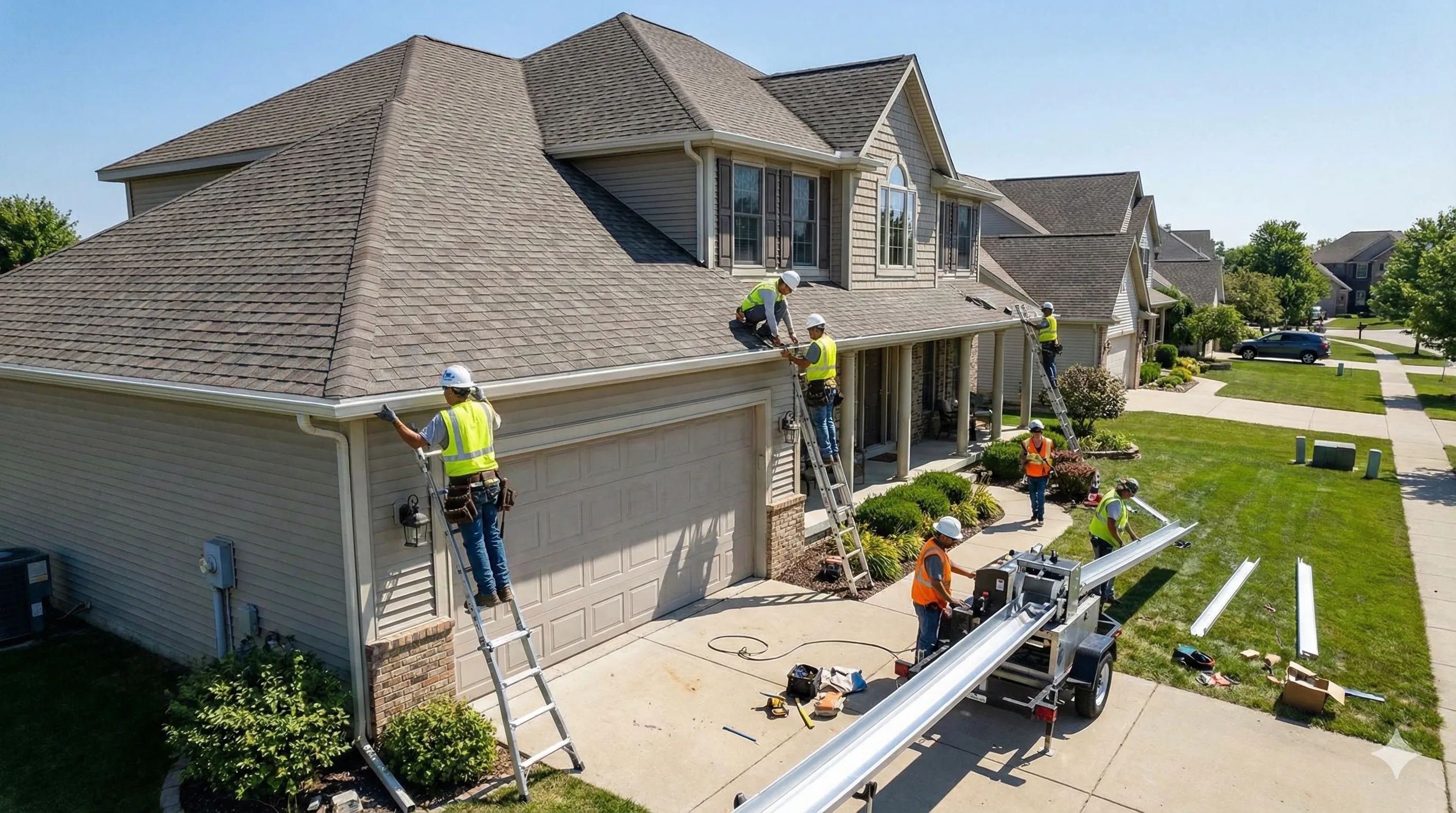
Residential Gutters
How Much Does Gutter Installation Cost in DFW?
How much does gutter installation cost in Dallas-Fort Worth? 2026 price ranges by material and length, what drives the cost, and where you can save.
September 30, 2026
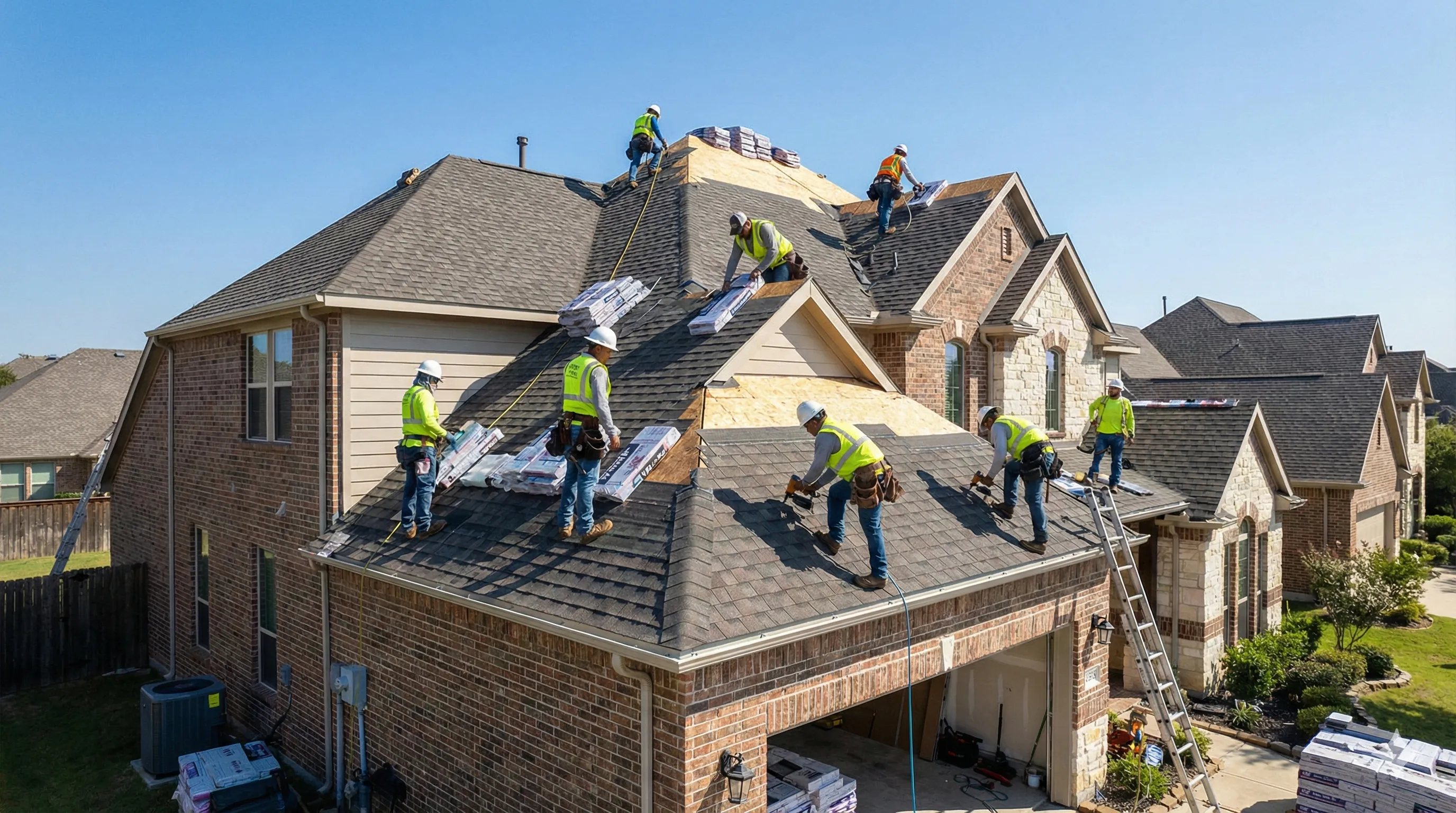
Residential Roofing
Are Class 4 Impact-Resistant Shingles Worth It in DFW?
Are Class 4 impact-resistant shingles worth it in North Texas? How they hold up to hail, what they cost, and how they can lower your homeowners insurance premium.
September 23, 2026
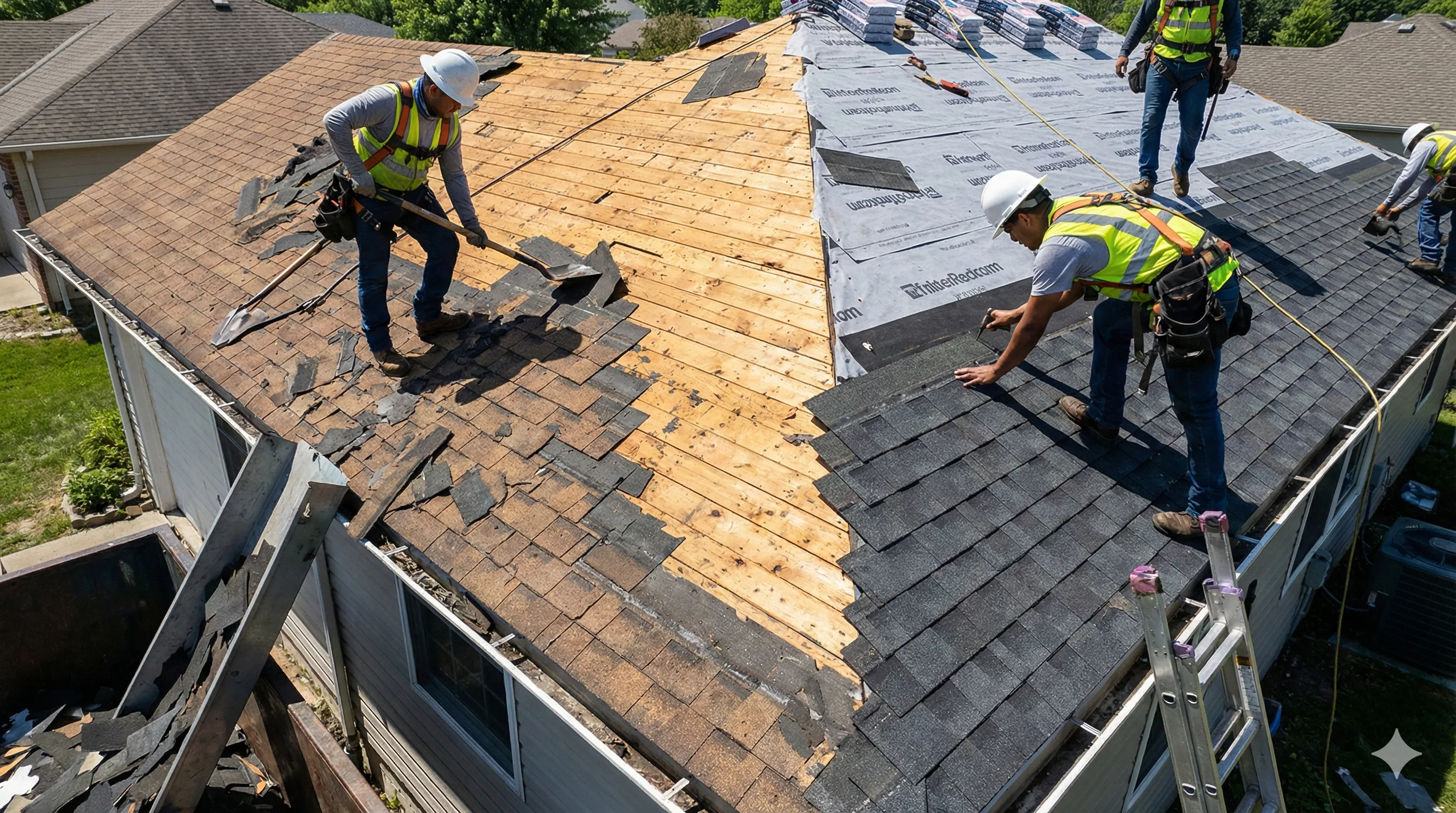
Residential Roofing
How Much Does a New Roof Cost in DFW? (2026 Guide)
What a new roof costs in Dallas-Fort Worth in 2026: price ranges by material, the factors that drive cost, and financing options for your replacement.
August 24, 2026
Residential Roofing
How Long Does a Roof Last in Texas? Lifespan by Material
How long roofs last in Texas by material: asphalt, metal, and tile lifespans, why DFW heat and hail shorten them, and signs your roof is near the end.
August 24, 2026